


Updated for 2026. The honest answer to “How much does a commercial inflatable water park cost?” is that a credible price follows a defined project. A compact family layout and a high-capacity floating obstacle course may share a category name while differing dramatically in module count, engineering, anchoring, transport volume and operating requirements. A single online price therefore tells buyers very little about the budget needed to open.
The better approach is to separate equipment price from total installed project cost. This guide explains the commercial variables behind a quotation, the costs buyers commonly overlook and the information a manufacturer needs to prepare a comparable proposal. It also offers a framework for evaluating value across expected service life without presenting an invented universal price range.
Start with Scope, Not a Price List
Define the operating location, target capacity, age profile, season length and guest experience before discussing price. The same footprint can be designed with open play modules, competitive obstacles, towers, slides or rest platforms. Custom themes and branding add design and production work. Ask suppliers to quote against the same brief and layout so that one proposal is not inexpensive only because it excludes modules, accessories or services included elsewhere.
For investors, resorts, waterfront venues and procurement teams, this decision should be tied to written acceptance criteria. Review the relevant commercial inflatable water parks, record assumptions, assign an owner and confirm how the choice affects commercial inflatable water park cost, operating labor, guest flow and future expansion. Evidence at this stage is less expensive than correction after production or installation.
Equipment Variables That Change the Quote
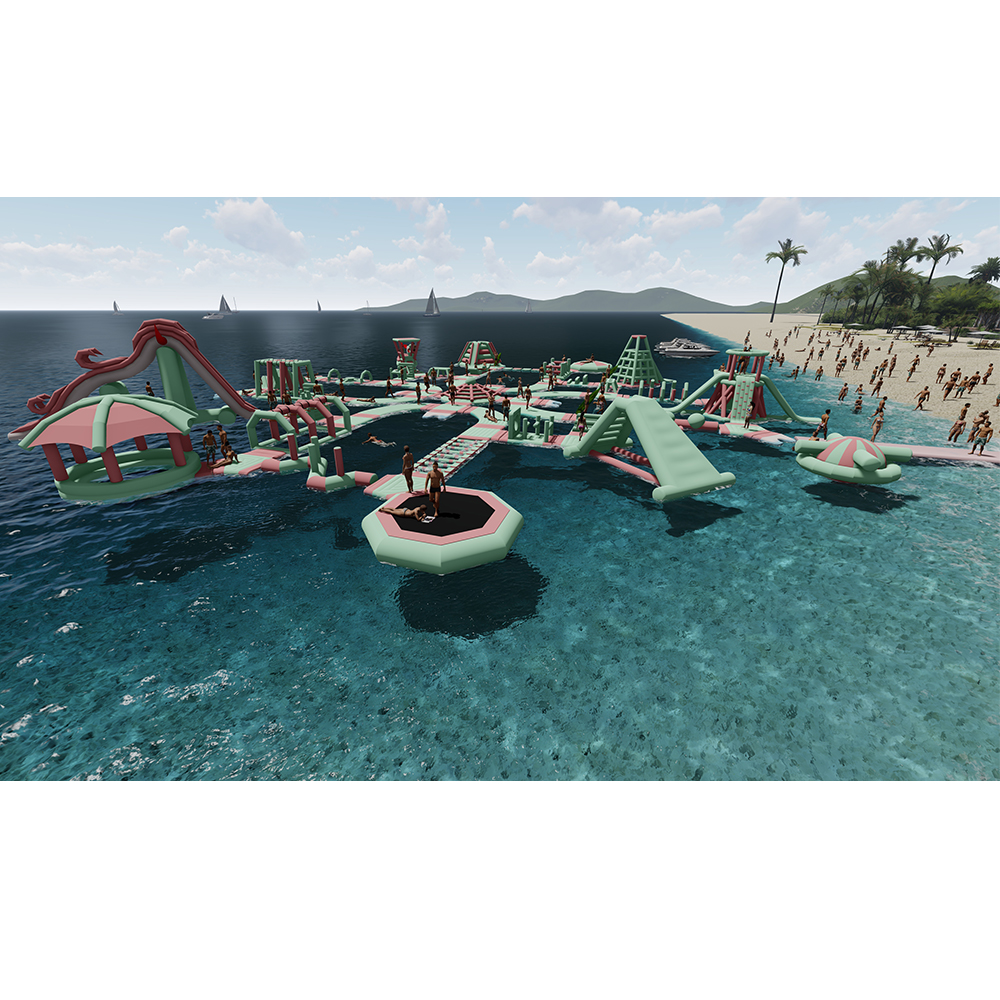
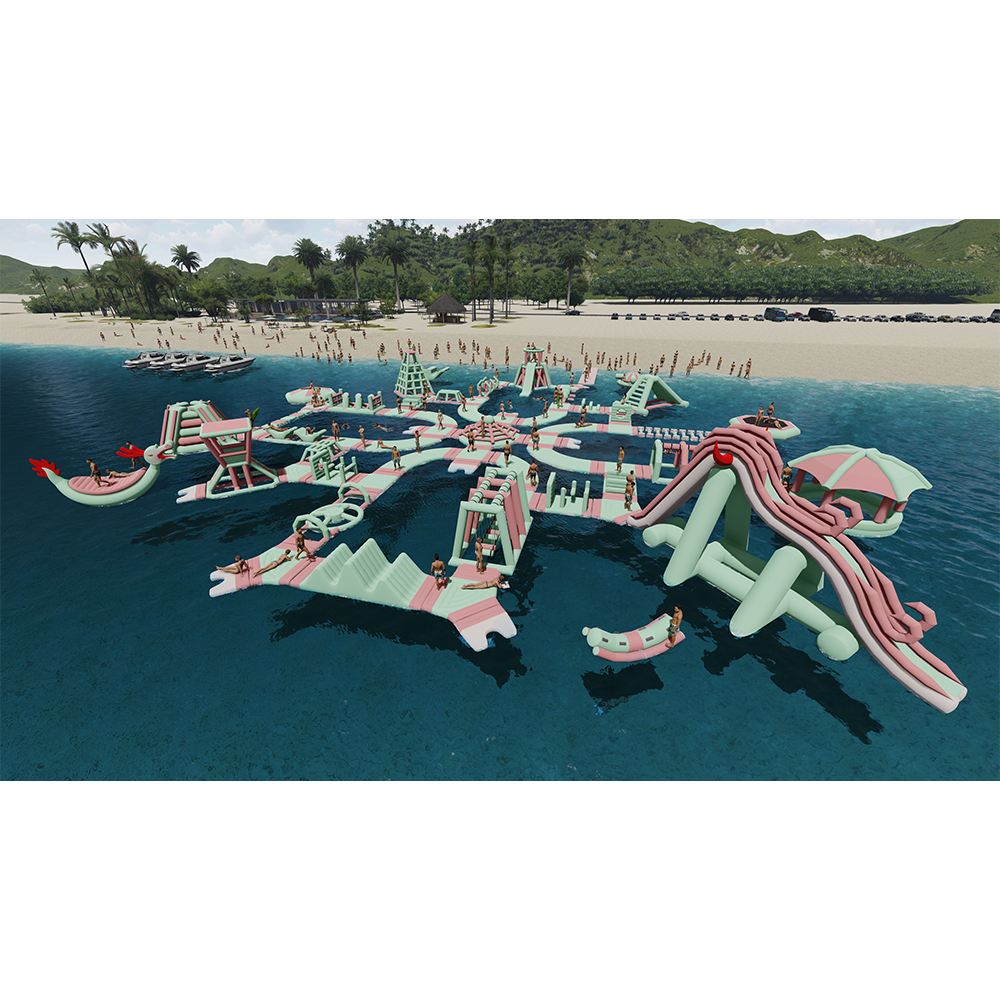
Module size, shape, internal structure, number of connection points, material system, graphics, reinforcement and accessories all influence manufacturing effort. Large towers and complex obstacles generally require more material and labor than low-profile modules. Airtight and continuous-air products also use different construction methods and inflation systems. A responsible proposal identifies each module and its dimensions; it should not hide the park inside one undifferentiated line item.
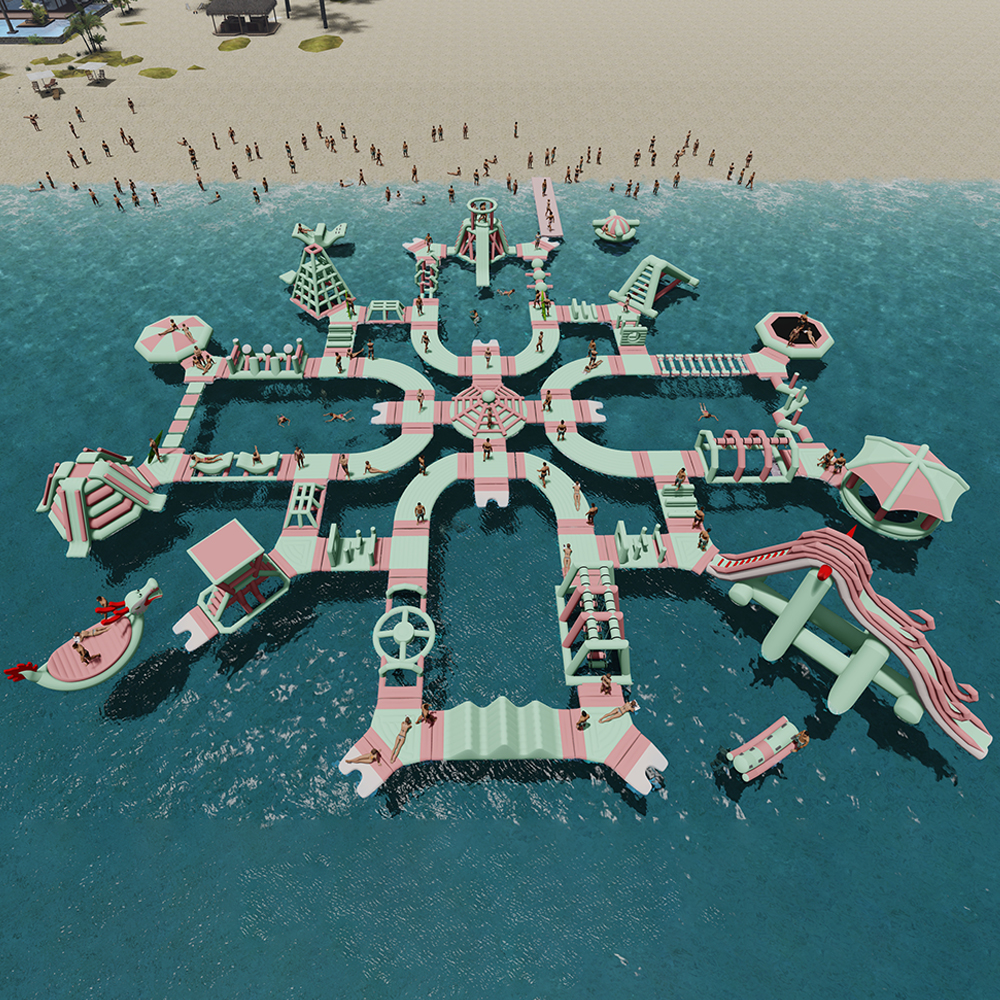
For investors, resorts, waterfront venues and procurement teams, this decision should be tied to written acceptance criteria. Review the relevant dragon-themed inflatable water park, record assumptions, assign an owner and confirm how the choice affects commercial inflatable water park cost, operating labor, guest flow and future expansion. Evidence at this stage is less expensive than correction after production or installation.
Freight, Customs and Local Delivery
Commercial inflatables occupy significant packed volume, so freight can materially affect landed cost. The route, season, container utilization, destination charges and inland delivery all matter. Buyers should clarify Incoterms, packing dimensions, weight and which party is responsible for customs documentation. If the venue is remote or has limited vehicle access, last-mile handling may require extra planning. Compare delivered scenarios using the same destination and assumptions instead of comparing factory prices from different bases.
For investors, resorts, waterfront venues and procurement teams, this decision should be tied to written acceptance criteria. Review the relevant download the product catalog, record assumptions, assign an owner and confirm how the choice affects commercial inflatable water park cost, operating labor, guest flow and future expansion. Evidence at this stage is less expensive than correction after production or installation.
Anchoring, Utilities and Site Preparation
The equipment cannot be budgeted separately from the site. Depending on the project, costs may include an anchoring design, anchors or ballast, installation labor, electrical distribution, pumps or blowers, shoreline platforms, fencing, ticketing, lockers and safety equipment. Bathymetric or geotechnical information may be required. Local professionals should validate the final anchoring and operating plan for the actual conditions. A low equipment quote cannot compensate for an incomplete site budget.
For investors, resorts, waterfront venues and procurement teams, this decision should be tied to written acceptance criteria. Review the relevant after-sales support, record assumptions, assign an owner and confirm how the choice affects commercial inflatable water park cost, operating labor, guest flow and future expansion. Evidence at this stage is less expensive than correction after production or installation.
Operations and Lifecycle Cost
Insurance, staffing, training, daily inspection, cleaning, repairs, winter storage, utilities and marketing belong in the business case. Establish a replacement reserve instead of assuming every module will deliver identical life regardless of UV, saltwater, usage or care. Ask about repair kits, spare valves, replaceable parts and support response. Total cost of ownership is improved by documentation, maintainability and a layout that can be reconfigured as demand changes.
For investors, resorts, waterfront venues and procurement teams, this decision should be tied to written acceptance criteria. Review the relevant accident-prevention guide, record assumptions, assign an owner and confirm how the choice affects commercial inflatable water park cost, operating labor, guest flow and future expansion. Evidence at this stage is less expensive than correction after production or installation.
How to Request a Comparable Quotation
Send each shortlisted manufacturer the same site plan, depth information, expected capacity, audience, operating season, theme, destination and target opening date. Require an itemized module schedule and written list of inclusions and exclusions. Ask for drawings, material details, quality-control steps, packing information, estimated production timing and after-sales scope. Record assumptions in a comparison sheet; unresolved assumptions should be treated as commercial risk, not as savings.
For investors, resorts, waterfront venues and procurement teams, this decision should be tied to written acceptance criteria. Review the relevant contact the project team, record assumptions, assign an owner and confirm how the choice affects commercial inflatable water park cost, operating labor, guest flow and future expansion. Evidence at this stage is less expensive than correction after production or installation.
Decision Table
| Cost layer | Typical components | Buyer question |
|---|---|---|
| Design | Layout, engineering, custom theme | Is design included and how many revisions? |
| Equipment | Modules, connectors, inflation system | Is every module itemized? |
| Delivery | Packing, freight, customs, inland transport | What Incoterm and destination assumptions apply? |
| Site | Anchoring, power, access, shoreline works | Who validates the site-specific plan? |
| Operations | Training, staff, insurance, maintenance | What must be funded before opening? |
| Lifecycle | Spares, repairs, storage, replacement reserve | What support is included after delivery? |
Commercial Planning Notes
Commercial value should be measured over the operating cycle. Consider utilization, labor, transport or site preparation, maintenance, storage, downtime and the ability to adapt the attraction to changing demand. A headline price or visual rendering cannot answer these questions. Use a scorecard with weighted criteria and require the evaluation team to explain important differences.
The final decision should be understandable to operations as well as procurement. Invite the people responsible for setup, supervision, cleaning, repairs and guest service into the review before approval. Their questions often reveal missing accessories, unrealistic timings or layout constraints while they are still easy to address.
Before signing a purchase order, run a final readiness review. Confirm the current drawing revision, dimensions, colors and artwork, product specification, included accessories, delivery basis, packed volume, schedule assumptions, site responsibilities, acceptance method, documentation, training and after-sales route. List exclusions explicitly. Where local permits, engineering, maritime rules, amusement regulations, insurance or safety standards apply, obtain advice from qualified professionals in the destination market and verify current requirements.
Use the download the product catalog to prepare initial options, review the frequently asked questions for common project questions and keep the after-sales support page available for post-delivery planning. These resources support the buying process, but the final solution must always be confirmed against the actual site, equipment and intended operation.
Frequently Asked Questions
Why do water park quotations vary so much?
The proposals may not describe the same capacity, module mix, materials, accessories, delivery basis or service scope. Normalize every quotation against one written brief before drawing conclusions.
Should buyers choose the lowest equipment price?
Not automatically. Evaluate completeness, documented specifications, layout suitability, quality-control process, lead time, support and lifecycle implications. The least expensive incomplete quote can produce the highest opening risk.
Does a custom theme always increase cost?
Custom colors, shapes, printed graphics and engineering can add design and production work. A manufacturer should explain which changes are standard options and which require additional tooling or structural development.
How can I get a useful budget estimate?
Provide a scaled site plan, location, water conditions, target audience, expected simultaneous users, preferred attractions, destination and opening target. A concept layout and scope are the basis for a meaningful budget.
Plan Your Project with ZR Inflatable
ZR Inflatable supports custom commercial inflatable projects for international buyers. To receive a relevant concept and quotation, send the project location, site dimensions, water or ground conditions, target users, expected capacity, preferred product types, branding requirements, destination and target opening date. contact the project team to begin a project discussion.
Important: This article provides general commercial planning information. It does not replace product instructions, a site-specific risk assessment, local legal requirements, insurer conditions or professional engineering and safety advice.
