

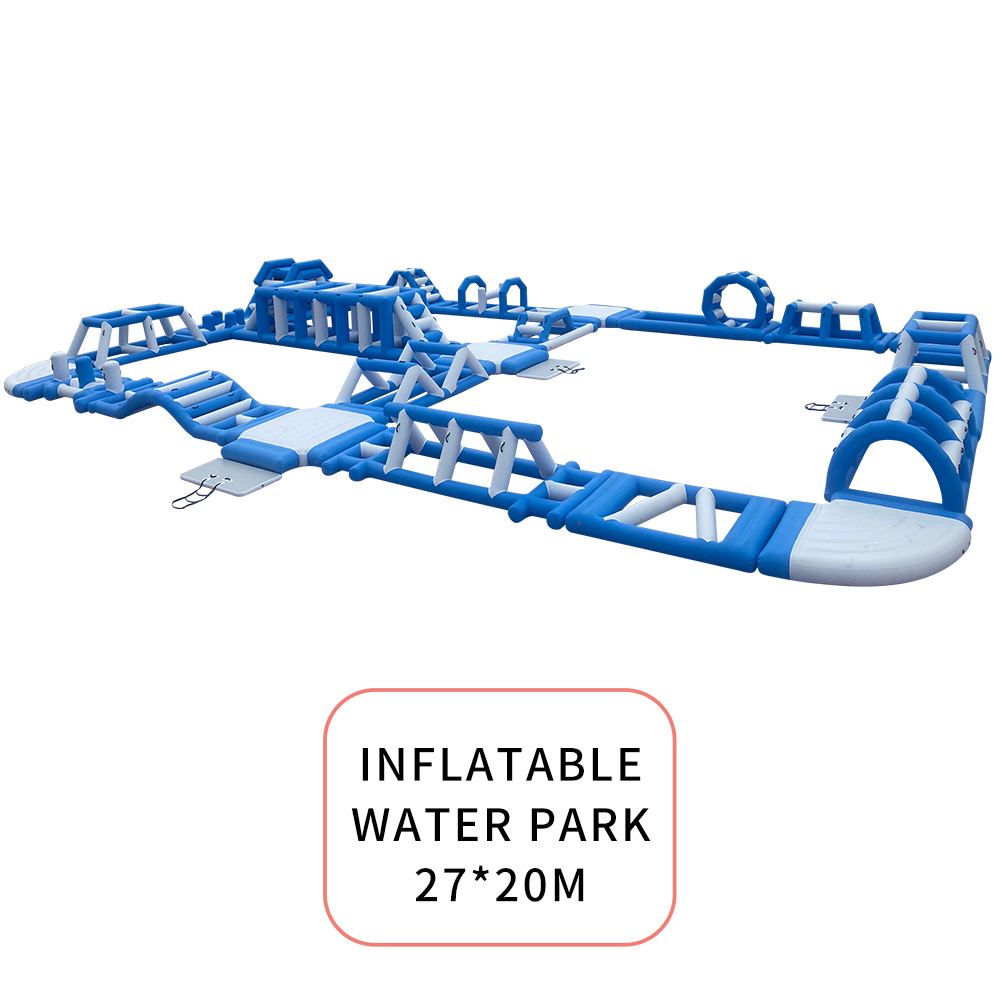
Updated for 2026. An inflatable water park can convert underused waterfront space into a high-throughput seasonal attraction, but buying modules is only one part of the project. The strongest businesses begin with a site model, guest-flow plan, operating rules and realistic demand forecast. That discipline matters in 2026 because guests expect memorable challenges while operators face rising expectations around supervision, weather decisions and documented maintenance.
This guide treats the project as a commercial system rather than a collection of inflatables. It explains how to validate a location, select capacity, plan a modular layout, build an operating team and request a useful supplier proposal. The goal is not to promise a universal return. It is to help decision-makers identify the variables that determine whether an inflatable water park business can be safe, attractive and financially sustainable.
Validate the Site and Local Demand
Measure usable water area, depth profile, shoreline access, wind exposure, water-level variation and the distance to emergency access. Then estimate demand by segment: families, teenagers, school groups, camps and resort guests. A busy beach is not automatically a good park site if parking, changing facilities or controlled entry are missing. Map competing attractions and ask local accommodation providers when visitor peaks occur. A credible feasibility study connects hourly capacity with realistic attendance rather than using the maximum physical capacity every day.
For resort owners, lake operators, campground managers and entrepreneurs, this decision should be tied to written acceptance criteria. Review the relevant commercial inflatable water parks, record assumptions, assign an owner and confirm how the choice affects inflatable water park business, operating labor, guest flow and future expansion. Evidence at this stage is less expensive than correction after production or installation.
Define the Business and Revenue Model
Choose whether the park will sell timed sessions, day passes, resort packages, group bookings or private events. Timed sessions often make capacity and cleaning windows easier to control, while hotel packages can reduce customer-acquisition costs. Add-on revenue may come from lockers, food, photographs or branded merchandise, but these should not distract from safe throughput. Build conservative, base and strong-demand cases. Include closure days, payment fees, marketing, insurance, storage and replacement reserves instead of comparing ticket revenue only with the equipment invoice.
For resort owners, lake operators, campground managers and entrepreneurs, this decision should be tied to written acceptance criteria. Review the relevant 27 × 20 m inflatable water park, record assumptions, assign an owner and confirm how the choice affects inflatable water park business, operating labor, guest flow and future expansion. Evidence at this stage is less expensive than correction after production or installation.
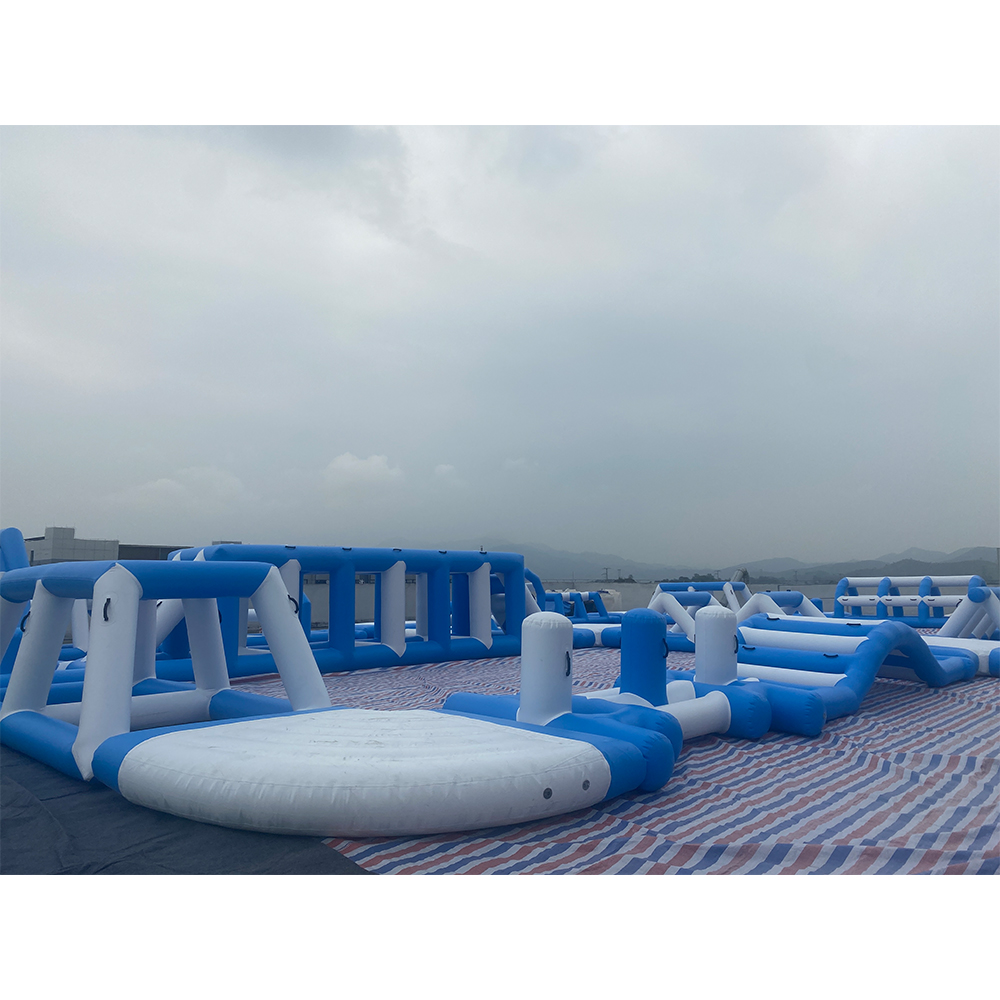
Choose Capacity, Challenge Level and Layout
Match modules to the age mix, swimming ability and target session length. Younger family audiences need clear routes, lower transitions and visible rest points; teenagers and adult groups may value climbing, balance and competitive lanes. A modular plan can create beginner, intermediate and advanced zones and allow later expansion. Separate launch and exit traffic, preserve staff sightlines and avoid bottlenecks where guests land. Ask for a scaled layout that identifies modules, connectors, safety clearances, anchoring positions and the intended flow direction.
For resort owners, lake operators, campground managers and entrepreneurs, this decision should be tied to written acceptance criteria. Review the relevant modular water park example, record assumptions, assign an owner and confirm how the choice affects inflatable water park business, operating labor, guest flow and future expansion. Evidence at this stage is less expensive than correction after production or installation.
Plan Safety, Staffing and Daily Control
Create rules for admission, buoyancy aids, session briefings, capacity, weather monitoring and emergency response. Staffing depends on the local authority, water conditions, layout and guest profile, so a generic ratio should never replace a site-specific risk assessment. Train supervisors to stop operations when thresholds are reached and keep daily inspection records. The operating plan should cover missing guests, injury response, sudden wind, lightning, loss of pressure and evacuation to shore. Confirm applicable laws, standards and insurance requirements with qualified local professionals.
For resort owners, lake operators, campground managers and entrepreneurs, this decision should be tied to written acceptance criteria. Review the relevant water park safety buying guide, record assumptions, assign an owner and confirm how the choice affects inflatable water park business, operating labor, guest flow and future expansion. Evidence at this stage is less expensive than correction after production or installation.
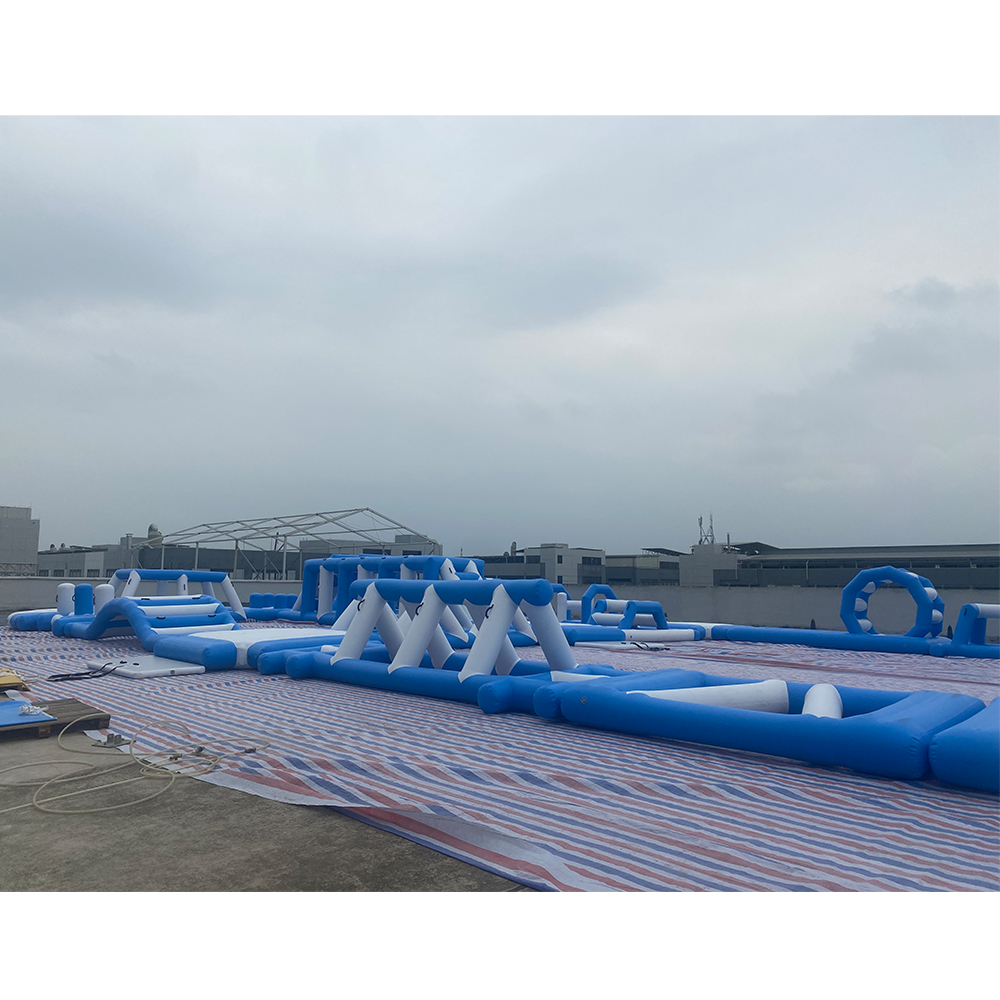
Build Procurement, Logistics and Installation into the Schedule
A useful supplier brief includes site drawings, water depth, expected users, preferred theme, target opening date, electrical conditions, access for deliveries and the destination port. The commercial schedule must allow for design approval, production, quality checks, transport, customs, local preparation, installation and staff training. Ask what is included in the quotation: blowers or pumps, connectors, anchoring guidance, repair materials, packing, manuals and spare parts. Build contingency into the launch date rather than advertising an opening based on factory completion alone.
For resort owners, lake operators, campground managers and entrepreneurs, this decision should be tied to written acceptance criteria. Review the relevant after-sales support, record assumptions, assign an owner and confirm how the choice affects inflatable water park business, operating labor, guest flow and future expansion. Evidence at this stage is less expensive than correction after production or installation.
Launch, Measure and Improve
Before public opening, run a controlled soft launch with staff families or invited groups. Time check-in, safety briefing, equipment entry, exit and reset. Record where guests hesitate and where supervisors lose sightlines. After launch, monitor paid occupancy, revenue per available session, incident and near-miss reports, cancellation reasons, repair time, guest ratings and repeat group bookings. These measures reveal whether to change session length, adjust staffing, improve signage or add modules. Use guest feedback as operational data, not merely as marketing material.
For resort owners, lake operators, campground managers and entrepreneurs, this decision should be tied to written acceptance criteria. Review the relevant contact the project team, record assumptions, assign an owner and confirm how the choice affects inflatable water park business, operating labor, guest flow and future expansion. Evidence at this stage is less expensive than correction after production or installation.

Decision Table
| Planning area | Decision to make | Evidence to collect |
|---|---|---|
| Site | Water area, depth and access | Survey, seasonal water levels, emergency route |
| Market | Target guests and peak periods | Visitor data, hotel occupancy, competitor review |
| Equipment | Capacity and challenge mix | Scaled layout, module list, flow map |
| Operations | Sessions, staffing and weather rules | Risk assessment and written procedures |
| Finance | Capital and operating assumptions | Three-scenario cash-flow model |
| Launch | Opening sequence and testing | Installation plan and soft-launch results |
Commercial Planning Notes
A strong procurement process moves from requirements to evidence, then from evidence to a controlled decision. Keep the commercial proposal, drawings, product specifications, operating assumptions and responsibility matrix aligned. If one document changes, review the others. This discipline helps the owner turn a promising waterfront into a controlled, scalable attraction without creating gaps between sales, production and on-site operations.
Build the project in phases: feasibility, concept, specification, production, delivery, commissioning and review. Each phase should have a named approver and an exit condition. That structure does not slow a project; it prevents late surprises from consuming the opening schedule. It also creates a reliable record for training, maintenance, insurance discussions and future expansion.
Before signing a purchase order, run a final readiness review. Confirm the current drawing revision, dimensions, colors and artwork, product specification, included accessories, delivery basis, packed volume, schedule assumptions, site responsibilities, acceptance method, documentation, training and after-sales route. List exclusions explicitly. Where local permits, engineering, maritime rules, amusement regulations, insurance or safety standards apply, obtain advice from qualified professionals in the destination market and verify current requirements.
Use the download the product catalog to prepare initial options, review the frequently asked questions for common project questions and keep the after-sales support page available for post-delivery planning. These resources support the buying process, but the final solution must always be confirmed against the actual site, equipment and intended operation.
Frequently Asked Questions
How much space does an inflatable water park need?
There is no universal minimum. The required area depends on the module footprint, safety clearance, water depth, anchoring geometry, entry route and local rules. Send a scaled site plan and recent depth information to the designer before requesting a final layout.
Is a modular park better for a first project?
Modular equipment can reduce expansion risk because an operator may open with a balanced core and add capacity after demand is proven. The connectors, anchoring concept and future expansion points should be engineered into the first design.
What should be included in a supplier quotation?
Request a module schedule, dimensions, material specification, included accessories, packing details, production lead-time assumptions, warranty terms, documentation, installation scope and clear exclusions. Freight, customs, local anchoring work and supervision should be identified separately.
Can the park operate in any weather?
No. Operating limits must reflect the product documentation, site exposure, local regulations and the operator’s risk assessment. The team needs defined monitoring, closure and evacuation procedures before opening.
Plan Your Project with ZR Inflatable
ZR Inflatable supports custom commercial inflatable projects for international buyers. To receive a relevant concept and quotation, send the project location, site dimensions, water or ground conditions, target users, expected capacity, preferred product types, branding requirements, destination and target opening date. contact the project team to begin a project discussion.
Important: This article provides general commercial planning information. It does not replace product instructions, a site-specific risk assessment, local legal requirements, insurer conditions or professional engineering and safety advice.
